
June 11, 2026
If you are looking for space, stability, and a classic Main Line feel, Easttown Township likely keeps showing up on your list. Buying here is different from buying in a denser, faster-turnover suburb because the housing stock, lot sizes, and overall pace of change create a more established market. If you want a clearer picture of what Easttown offers, what tradeoffs to expect, and how to plan your search, this guide will help you move forward with confidence. Let’s dive in.
Easttown Township is a small Chester County community of about 11,000 residents spread across 8.2 square miles. The market reads as premium, owner-occupied, and well established, with an 88% owner-occupied housing rate and a median owner-occupied home value of $852,800.
Just as important, only 6.7% of residents reported moving in the prior year. That lower turnover helps explain why buyers often need patience here. When homes come to market in Easttown, they are often competing for a limited supply in a place where many owners stay put.
Easttown is not built around rapid change or large waves of new development. The township’s planning framework focuses on managing change while preserving neighborhood character, with attention to historic preservation, economic sustainability, transportation connectivity, and environmental protection.
For you as a buyer, that usually means a more settled suburban environment rather than a growth-driven one. You are shopping in a community that tends to value continuity, mature surroundings, and thoughtful infill over major redevelopment.
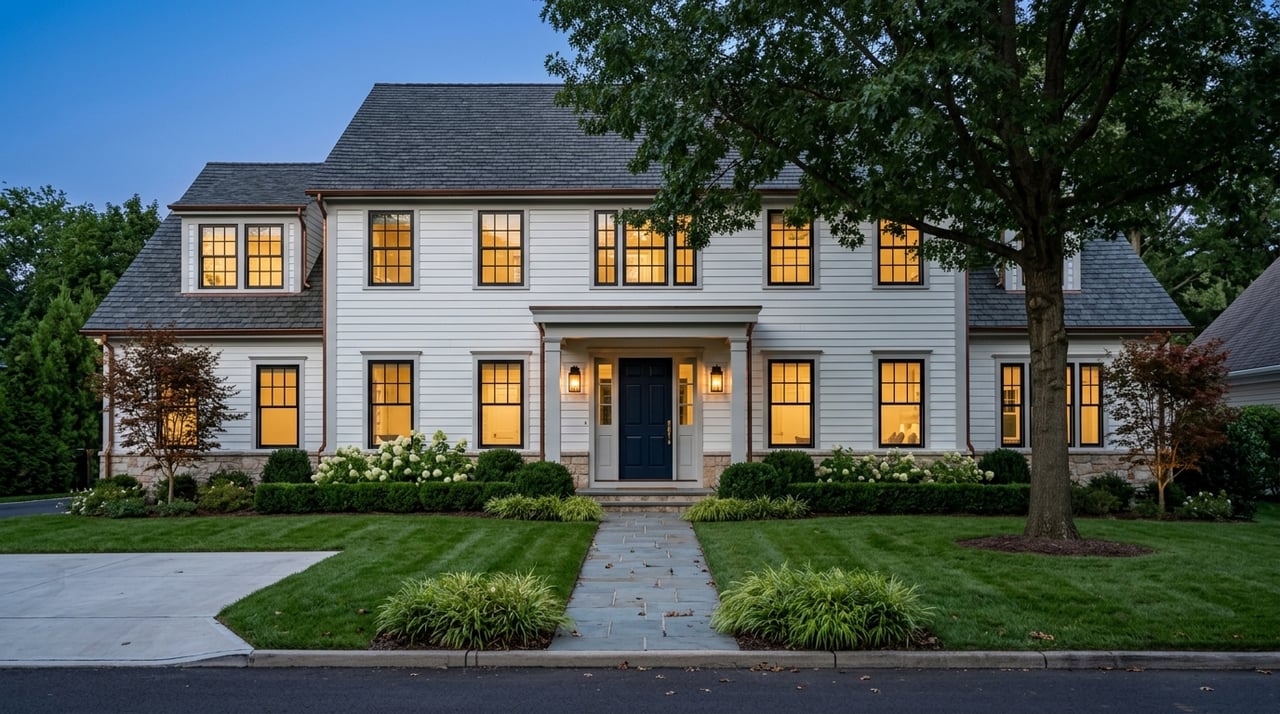
Easttown is defined largely by single-family detached homes. Planning materials describe detached housing on large lots as the township’s dominant land-use pattern, and the older plan notes an average lot size of about one acre.
That does not mean every home sits on a full acre, but it does tell you a lot about the character of the market. If you want yard space, mature landscaping, and more breathing room between homes, Easttown is well aligned with that goal.
Current zoning helps illustrate how product differs across the township. Minimum lot sizes range from 80,000 square feet in AA zones and 1 acre in R-1 zones to 21,000 square feet in R-2, 14,000 square feet in R-3, 8,500 square feet in R-4, and 5,000 square feet in R-5.
In practical terms, the northeast area near Route 30 and Berwyn tends to include more compact residential and village-pattern settings. Much of the southwest is zoned AA or R-1, which supports the larger-lot character many buyers associate with Easttown.
Easttown is strongest for buyers seeking detached homes. You will generally find less townhouse, condo, or borough-style density here than in some other Main Line communities.
That makes Easttown a strong fit if your wish list includes privacy, outdoor space, and a more traditionally suburban setting. If your priority is a smaller home on a smaller lot in a denser, more walkable environment, you may want to compare Easttown carefully with nearby alternatives.
Easttown Township is served by the Tredyffrin/Easttown School District, which covers Easttown and Tredyffrin across 38 square miles in eastern Chester County and serves more than 7,000 students in eight schools. For many relocating and move-up buyers, that district alignment is a major reason Easttown stays under consideration.
Beyond schools, the day-to-day lifestyle here is more suburban and local than urban. The township maintains parks including Hilltop Park, Johnson Park, and Sharp’s Woods Preserve, giving residents access to athletic fields, playground space, walking paths, and nature trails.
Hilltop Park includes athletic fields, a playground, a walking path, and a pavilion. Sharp’s Woods Preserve adds a 28-acre nature preserve with trails, which supports the township’s quieter, outdoors-oriented feel.
If you value green space as part of everyday life, these amenities add to Easttown’s appeal. They also reinforce the township’s identity as a place centered on residential living rather than heavy commercial activity.
Easttown offers a mix of rail and road access that works well for many Main Line buyers. SEPTA’s Paoli/Thorndale Line serves Berwyn and Devon stations within the township, and nearby Paoli Station adds Amtrak Keystone Service.
Road access also shapes how people move through the area. Township materials identify Lancaster Avenue, Devon State Road, Route 252, and several other state roads as principal public corridors.
The township’s mean travel time to work is 27.9 minutes. That figure will vary based on your destination and schedule, but it gives you a useful baseline if you are comparing Easttown to other suburban options.
In a premium market, it is smart to look past the purchase price and plan for carrying costs. Easttown’s official tax pages list a 2025 Chester County real estate tax rate of 5.164 mills and a 2025-2026 school millage rate of 29.6567 mills.
The township also lists a local earned income tax of 0.5% effective January 1, 2025. As you build your budget, these recurring costs should be part of your decision right alongside mortgage payment, insurance, and maintenance.
When you buy in Easttown, you are often buying a larger home, a larger lot, or both. That can bring added value and enjoyment, but it can also mean higher ongoing upkeep.
Before you make an offer, it helps to think through the full monthly and annual picture. A home that feels comfortable at closing should also feel comfortable once taxes, utilities, maintenance, and longer-term improvements are part of the equation.
Easttown sits in the premium tier of the local Main Line market. Its median owner-occupied home value is $852,800, compared with $810,400 in Lower Merion, $833,900 in Radnor, $749,500 in Narberth, and $466,400 in Haverford Township.
The bigger story is not just price. Easttown also stands out for its detached-home profile, with 89% single-unit structures, compared with 68% in Lower Merion, 65% in Radnor, and 59% in Narberth.
Compared with Narberth, Easttown generally offers more yard space and a less borough-like setting. If you want a more compact, denser environment, Narberth may feel different in a meaningful way.
If your priorities lean toward lot size, privacy, and a quieter suburban rhythm, Easttown may be the stronger match. The tradeoff is that Easttown typically offers a higher price point and less of that borough-style feel.
Compared with Lower Merion and Radnor, Easttown tends to feel more consistently low-density. Those communities offer a broader mix of housing types and development patterns, while Easttown is more uniformly tied to detached-home living.
That consistency is part of Easttown’s appeal for many buyers. If you are trying to narrow your search, the question is often less about which township is best and more about which one best matches your preferred pace, home style, and lot size.
Compared with Haverford Township, Easttown is much more expensive, even though both places have a strong single-family profile. That makes Easttown less attractive for buyers focused mainly on a lower entry price.
But if your top priorities are larger lots, premium positioning, and a stable detached-home market, Easttown may justify the premium. This is where a very clear understanding of your budget and lifestyle goals matters most.
Easttown tends to work best for buyers who want a detached home, more land, and an established neighborhood feel. It can be especially appealing if you are moving up, relocating to the Main Line, or looking for a long-term home in a stable suburban setting.
It may be less ideal if you want a broad range of lower-maintenance housing options or a more urban-style street pattern. In other words, Easttown rewards buyers who are intentionally shopping for space and stability, not just a Main Line zip code.
Because turnover is limited, your search strategy matters. A strong plan can help you act decisively when the right home appears.
Buying in Easttown Township is often about choosing a specific kind of Main Line lifestyle. You are not just buying a house. You are buying into a low-turnover, detached-home-oriented community where space, stability, and established neighborhood character carry real value.
If that sounds like the right fit for you, the next step is making sure your search is tailored to Easttown’s actual housing patterns and pace. Working with an advisor who understands how Main Line buyers compare locations, evaluate value, and move strategically can make that process much smoother.
If you are considering Easttown or comparing it with other Main Line communities, Jordan Arnold can help you build a smart, neighborhood-specific plan.
His meticulous attention to detail and direct approach ensure that each transaction is conducted with efficiency and professionalism, distinguishing him as a standout figure of excellence within the business community.