
April 16, 2026
If you are deciding between Easttown and Lower Merion, the surprise is this: price is not the biggest difference. In 2024, the median home sale price was $815,500 in Easttown and $803,500 in Lower Merion, which puts both townships in a similar range for many buyers. What often matters more is how you want to live day to day, from housing style to errands to commuting options. This guide will help you compare both areas in practical terms so you can focus your search with more confidence. Let’s dive in.
For many buyers, these two townships can seem interchangeable at first. Both are well-known Main Line locations with established housing markets, similar commute times, and access to regional transportation.
But the numbers show a few meaningful differences. Chester County’s 2024 municipal housing data reports a median sale price of $815,500 in Easttown, compared with $803,500 in Lower Merion. The same report counted 117 home sales in Easttown and 746 in Lower Merion, which points to a much larger and more active market in Lower Merion.
Census QuickFacts for Easttown shows a median owner-occupied home value of $852,800 and an owner-occupied rate of 88.2%. Census QuickFacts for Lower Merion shows a median owner-occupied home value of $810,400 and an owner-occupied rate of 74.7%. In simple terms, Easttown reads as a smaller, more owner-occupied market, while Lower Merion offers more scale and more turnover.
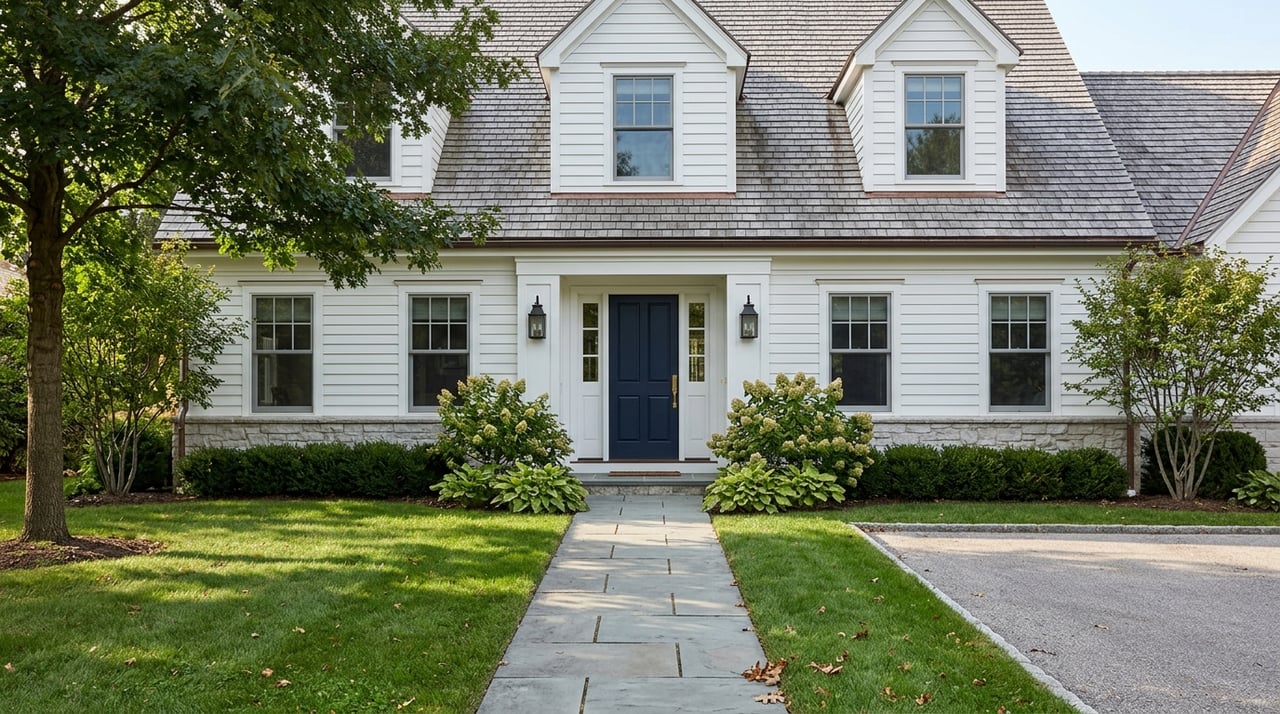
If you picture a more uniform suburban setting with detached homes and larger lots, Easttown may feel like the cleaner fit. According to Easttown’s comprehensive plan, single-family detached homes make up about 75% of the township’s housing units, while townhouses and twins account for about 13% and apartments about 5%.
That same plan describes Easttown as a place shaped by a largely rural past, with many homes historically built on lots larger than two acres. It also notes that the average lot size is about one acre. For buyers, that often translates into a housing search centered on detached homes, larger yards, and a more consistent residential pattern.
Lower Merion gives you more choice by housing type and price point. Its community profile says 69.7% of housing units are single-family, 57.8% are single-family detached, and 25.2% are in buildings with five or more units.
That variety shows up in pricing too. A Montgomery County housing price report shows Lower Merion’s 2024 median sale prices at $1,102,500 for detached homes, $510,000 for attached homes, and $285,000 for multifamily homes. For you as a buyer, that means Lower Merion may offer more options if you are weighing a detached home against a townhome, condo, or apartment-style property.
Easttown’s planning documents point to Berwyn and the Route 30 corridor as the township’s main commercial, service, and retail area. The comprehensive plan also highlights the Devon Train Station and Route 30 area as a focus for mixed-use redevelopment.
That creates a simpler daily-use pattern. Instead of several major village nodes, Easttown is more centered around a primary commercial corridor. If you like a more compact feel with a clearly defined hub for shopping and services, that can be appealing.
Lower Merion functions differently. Its community profile identifies several SEPTA-served areas including Merion, Narberth, Wynnewood, Ardmore, Haverford, Bryn Mawr, and Rosemont, along with commercial corridors such as Lancaster Avenue, Montgomery Avenue, and City Avenue.
The same profile notes that Ardmore includes the Lancaster Avenue corridor and Suburban Square, while Gladwyne, Penn Wynne, Merion-Cynwyd, and Bala Avenue serve as neighborhood commercial centers. For buyers, that means your day-to-day experience can vary more depending on where you land within the township.
If you are comparing commute time alone, the difference is small. Census data for Easttown shows a mean travel time to work of 27.9 minutes, while Census data for Lower Merion shows 29.0 minutes.
That means most buyers should not expect one township to dramatically outperform the other on average travel time. The better question is how you prefer to move around.
Easttown remains more auto-oriented overall. Its 2019-2023 commuting profile, cited in the research, shows 60.1% of workers drove alone, 5.9% used public transportation, and 28.4% worked from home. Easttown’s planning framework also notes that rail and bus service provide its main non-automobile options.
Lower Merion offers a denser transportation structure. Its profile emphasizes multiple rail stations, bus access, and major road connections including I-76 and I-476. It also has a more developed active transportation network, with 68 miles of pedestrian routes and 46.25 miles of bike routes mapped through the township.
One of the biggest practical differences is how many homes come to market. Easttown had 117 sales in the 2024 county report, while Lower Merion had 746. That does not make one better than the other, but it does shape your search strategy.
In Easttown, a smaller market can mean fewer opportunities at any given time, especially if you are focused on a specific home style, lot size, or location near Route 30. In Lower Merion, the larger volume can create a broader range of choices across different villages and housing types.
Easttown is often the better match if your search starts with land, yard size, and a more uniform housing pattern.
Lower Merion is often the better match if you want more flexibility in home type and a wider range of location patterns within one township.
When buyers compare Easttown and Lower Merion, it helps to go beyond headline prices. Since the median sale prices are close, your decision may come down to three practical filters:
If you answer those questions first, your search usually becomes much more efficient.
Whether you are drawn to Easttown’s lot-oriented housing pattern or Lower Merion’s broader mix of homes and village centers, the right choice depends on how you want your home to function in everyday life. If you want help narrowing the field, comparing specific neighborhoods, or building a strategy around your budget and goals, Jordan Arnold can help you navigate the Main Line with clear, local guidance.
His meticulous attention to detail and direct approach ensure that each transaction is conducted with efficiency and professionalism, distinguishing him as a standout figure of excellence within the business community.