
August 20, 2026
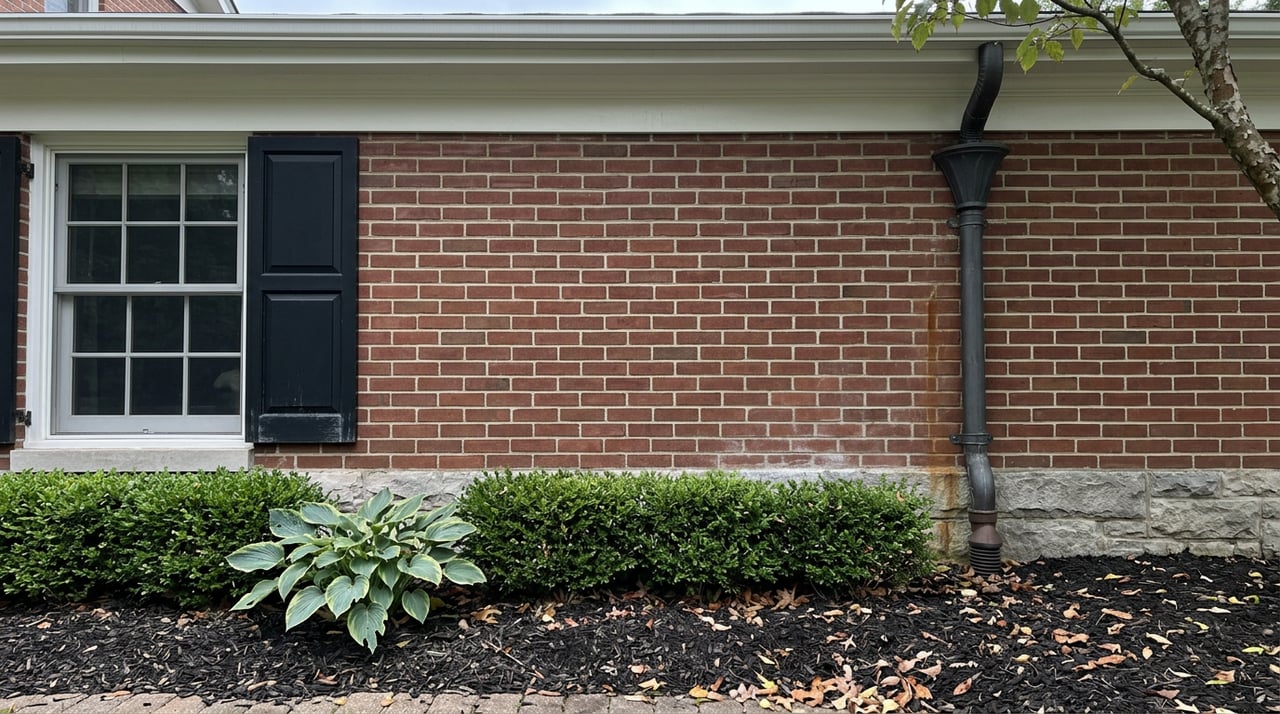
The brick center-hall colonial on your list shows beautifully. Leaded glass over the front door, a light-filled conservatory wing, black shutters against pale mortar joints that have held for a century. What the showing does not tell you is what happens underground, behind the plaster, and inside a tank buried somewhere on the lot that nobody has opened in years.
That gap between what a home shows and what it hides is not unique to Villanova. But the age and scale of the housing stock here make the gap wider than it is in a newer subdivision, and Pennsylvania's own rules leave more of that gap for the buyer to close than most people expect walking into their first inspection contingency.
A standard home inspection on a Main Line property runs about two and a half to four hours, longer if the house has a finished basement, a carriage house, a pool, or acreage that takes time to walk. That window covers the roof, the structure, the visible plumbing and electrical, the HVAC, and the interior systems an inspector can access and see. For early-1900s stone and stucco construction, that same walk-through routinely turns up slate and tile roofing, original windows, cast iron and galvanized plumbing, oil or steam heat, and knob-and-tube wiring behind modern finishes. All of that is real, all of it gets documented, and all of it is priced into how most buyers plan their contingency period.
What that standard inspection window does not automatically include is the part of the property nobody sees on a walk-through: the septic system, if there is one, and the sewer line running from the house to the street. Those require separate specialists, separate scheduling, and in Pennsylvania, a separate decision about whether to do it at all.
Here is the detail that catches people off guard. Pennsylvania has no statewide law requiring a septic inspection before a home sale closes. The buyer can choose to have one performed before closing, but nothing forces the issue at the state level. Whether an inspection is required at all depends on the township, since individual municipalities can impose their own point-of-sale rules through the local Sewage Enforcement Officer, the same official who permits new installations and oversees which lots can support a system in the first place.
That means two buyers closing on similar Villanova properties a mile apart can face entirely different rules, one required to produce a septic report before the deed changes hands, the other free to skip it if their agent doesn't flag it and their lender doesn't ask. On a property built before public sewer reached this stretch of the Main Line, or on a larger lot where the system predates modern standards, skipping that inspection is the single easiest way to inherit a problem nobody priced into the offer.
A real septic inspection is not a quick lid-lift. Here is roughly what it involves and what it costs across Pennsylvania:
| What happens | Typical range |
|---|---|
| Time on site | 2 to 4 hours |
| Cost | $300 to $900 |
| Includes | Tank pump-out, baffle and wall check, drain field evaluation |
| Who usually pays | Buyer, unless the township requires seller point-of-sale inspection |
| Regional note | Southeastern PA suburbs run toward the higher end of the range |
The inspector locates and uncovers the tank, which on an older property sometimes means probing the yard because tanks installed decades ago often lack risers or visible markers. Once it is exposed, they pump it completely and check the walls and baffles for cracks, then measure the sludge and scum layers, which tell them whether the system has been maintained on schedule or neglected for a decade. They also evaluate the drain field for standing water or unusually green patches, and on a vacant property they may need to run a hydraulic load test, simulating normal household water use because a system that has sat empty stops behaving normally.
Skip that process on the assumption that it is baked into a standard inspection and you may not find out the drain field is failing until you own it.
Villanova's mature tree canopy is part of what sells the neighborhood, and it is also part of what ages the plumbing underneath it. Pre-war and mid-century homes on the Main Line commonly sit on clay and cast iron sewer laterals that run beneath decades-old root systems and long front lawns. A camera scope through a cleanout or drain access point is the only reliable way to see the actual condition of that buried line, and it is a separate service from the general inspection, not a line item most buyers think to request until an agent or inspector raises it.
The same logic that applies to septic systems applies here. A house can look immaculate from the street and still be sitting on a lateral that is cracked, root-intruded, or partially collapsed twenty feet under the lawn. Nobody sees it until someone looks for it on purpose.
Southeastern Pennsylvania, including the three counties that make up the Main Line, sits in the highest EPA radon risk classification, known as Zone 1. Radon is colorless and odorless, and it is the second leading cause of lung cancer in the United States. Testing takes a certified technician about 48 hours to produce results, and on a stone foundation with a finished basement, the older housing stock that defines this area is exactly the kind of construction where moisture intrusion and gas infiltration are worth taking seriously rather than treating as a formality.
Many Villanova-area homes still carry knob-and-tube wiring or undersized electrical panels tucked behind updated finishes. A capable inspector traces what is original, what has been upgraded, and what a lender or insurer is likely to flag before they will underwrite the property. On a house where the kitchen was renovated in the last five years but the panel wasn't touched, that distinction is the difference between a cosmetic conversation and a five-figure electrical scope added to your closing punch list.
None of this is a reason to avoid an older Villanova home. It is a reason to build your inspection contingency around what this specific kind of property actually requires, rather than the generic checklist that works fine on a ten-year-old build. Before you write an offer, it is worth asking:
The answers change what you negotiate for, whether that's a price adjustment, a repair credit, or simply timing your contingency period long enough to get the septic and sewer scope results back before you're forced to decide.
Does every Villanova property have a septic system? No. Much of the neighborhood connects to public sewer, but larger lots and some older estate-scale properties still rely on private septic systems, so this is a question to confirm early rather than assume either way.
Who pays for the septic inspection if the township doesn't require one? In most Pennsylvania transactions, the buyer pays for it as part of their own due diligence, since it is not a mandated point-of-sale requirement unless the local municipality says otherwise.
Can a standard home inspector check the septic system as part of the regular inspection? A general inspector can note visible signs of trouble, but a full evaluation, including pumping the tank and testing the drain field, requires a separate septic specialist with the right equipment. It is not something a walk-through alone can confirm.
If you're weighing an older Villanova home and want a clear-eyed read on what its systems will actually cost to verify before you close, Jordan Arnold can walk you through what to ask for in your inspection contingency and help you negotiate from a position of knowledge rather than guesswork. Reach out to request a confidential consultation before you write your next offer.
His meticulous attention to detail and direct approach ensure that each transaction is conducted with efficiency and professionalism, distinguishing him as a standout figure of excellence within the business community.